Rowa Kyang
PROJECT SYNOPSIS
No one has ever become POOR by giving – will you donate?
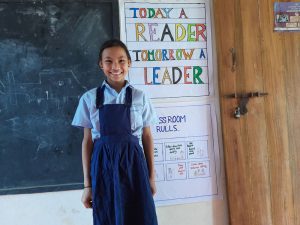
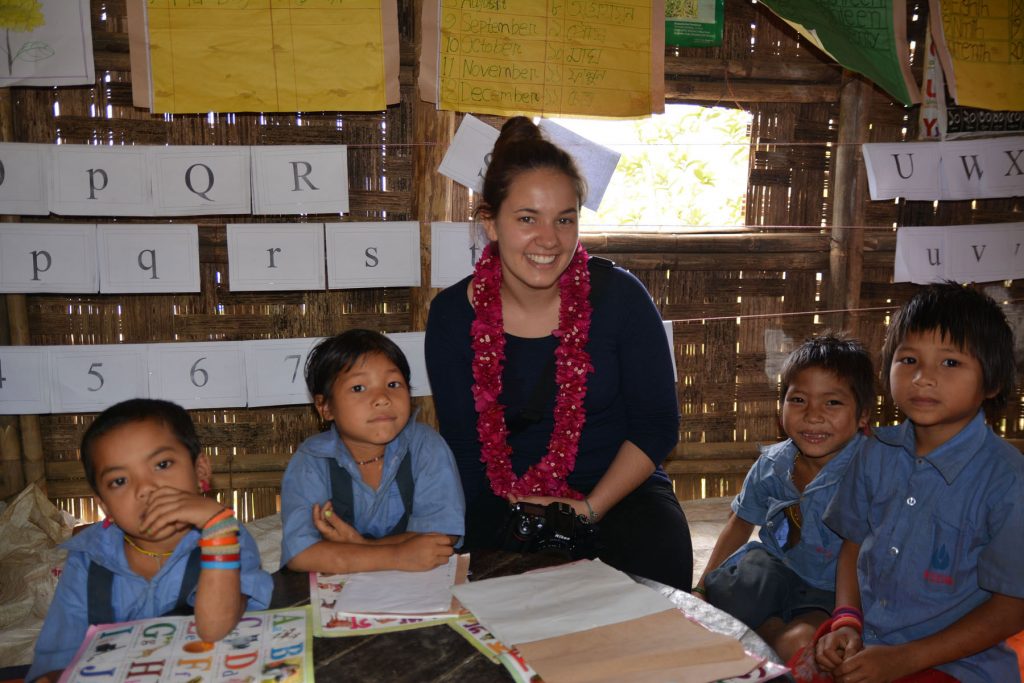
Rowa Kyang, a Marma language meaning ‘village school‘, is a primary education project of Humanitarian Foundation (HF). The project commenced in January 2020, and will end in December 2027. There was no school in this area before. To facilitate access to primary education, a total of 34 primary schools were set up at the village level in Thanchi, Lama, Bandarban sadar, and Ruma upazila (sub-district) of Bandarban Hill District of Bangladesh with funding support from CO:OPERAID, a Switzerland based non-governmental organization. 2 teachers were appointed to each school, and trained them on pedagogy. Besides teacher appointment, Project Supervisors, a Project Monitoring Officer, and a Project Coordinator were also appointed to successfully and effectively run the village primary schools. Moreover, School Managing Committee (SMC) was formed in every school consisting of 11/15 members to oversee the day to day school activities. Government curriculum is followed for teaching in schools. A total of 15 schools have been sustainable out of 34. The sustainable schools are run by the SMC in technical support of HF.
Project supports teaching and learning materials, teachers’ salary, teachers’ training, community rice banks, family IGAs (horticulture development, livestock and poultry raising), schools IGAs (mango garden, boat renting). Project provides primary health care (preventive), and WASH (school and household level), and organizes health campaigns on deworming, measle prevention, malaria prevention, water & air borne diseases (jaundice, typhoid, diarrhea, dysentery cholera), and negative impact of drug use. Project establishes Village Common Forests (VCFs) at the field level to conserve and preserve forest.
In addition, the project established a ‘school fund‘ in each school for sustainability. Income from the school IGAs, service charges of the community rice banks, as well as school fees (taka 50/100 in month) of the children are deposited to the school fund. Expenses of sustainable schools (teachers’ salary, teaching and learning materials etc.) are spent from school funds.
PROJECT OVERVIEW
| Sl# | Description | ||
| 1 | Name of organization | : | Humanitarian Foundation (HF) |
| 2 | Project title | : | Rowa Kyang (a Marma language meaning village school) |
| 3 | Donor organization | : | CO:OPERAID, Switzerland |
| 4 | Period of project implementation | : | 1st January 2020 to 31st December 2027 |
| 5 | Project/working area | : | Bandarban sadar, Ruma and Thanchi upazila |
| 6 | No. of direct beneficiaries of the project | : | Total 509 students/children |
| 7 | Year wise budget of the project | : | 1st year/2020: BDT 20,853,310 (phase-1) 2nd year/2021: BDT 16,573,090 (phase-1) 3rd year/2022: BDT 15,073,600 (phase-1) 4th year/2023: BDT 24,008,325 (phase-2) 5th year/2024: BDT 21,846,200 (phase-2) 6th year/2025: BDT 30,000,000 (phase-2) 7th year/2026: BDT 47,097,845 (phase-3) 8th year/2027: BDT 26,586,171 (phase-3) |
| 8 | District/upazila wise budget segregation | : | Bandarban sadar upazila: BDT 40,407,710 Ruma upazila: BDT 40,407,710 Thanchi upazila: 121,223,121 Grand total in 3 years: 202,038,541 |
| 9 | Date of approval of NGO Affairs Bureau | : | 10/02/2020, 18/02/2025, 30/08/2026 |
| 10 | Reference no. of approval of NGO Affairs Bureau | : | 03.07.0000.662.68.154.19-121 03.07.2666.662.68.060.22-24 03.07.0000.000.664.68.0098.25-1018 |
| 11 | Detail budget (as per statement in the column 12 of the FD-6) | : | Detail budget given/shown in the link (the text is in Bengali/Bangla). |
PROIECT OUTCOMES (QUALITATIVE AND QUANTITATIVE)
❯ A total of 34 primary schools were set up at the village level. Of these, 15 schools have been sustainable. The remaining 19 schools are on the way to sustainability.
❯ A school fund was established with the income from IGAs, children’s school fees, service charges from the community rice banks, and local donations.
❯ Children from poor families have the opportunity to study through these schools.
❯ So far, 5,000 children have completed their primary education from these schools, and they are now pursuing studies in secondary schools, colleges, and universities.
❯ Community understood the importance of education, and their participation and contribution in school management increased.
PROJECT SUSTANABILITY
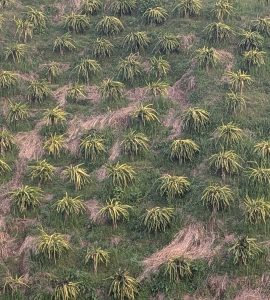
❯ A total of 15 schools have been sustainable out of 34. The remaining 19 schools are on the way to sustainability. The sustainable schools have been handed over to the communities, and the communities are running the sustainable schools in technical support of HF. Expenses of sustainable schools (teaching and learning materials, teachers’ salary etc.) are spent from the School Funds.
❯ For sustainability, a School Fund was established. Income of school IGAs (fruit orchard, boat rent), service charges of community rice banks, income of Village Common Forests (VCFs), and school fees are deposited to the school funds.
❯ For school sustainability, income generating activities (IGAs) such as renting boats, fruit orchard development have been set up/established at the school level.
PROJECT STAFF STRENGTH
| Designation/position | Gender | Total | |
| Male | Female | ||
| Project Coordinator | 1 | 1 | |
| Monitoring and Reporting Officer | 1 | 1 | |
| Project Supervisor | 1 | 1 | 2 |
| School Teacher | 28 | 40 | 68 |
| Total project staff | 31 | 41 | 72 |
ROWA KYANG PROJECT PROPOSAL & BUDGET SUMMARY


PROGRAM PHOTOS


